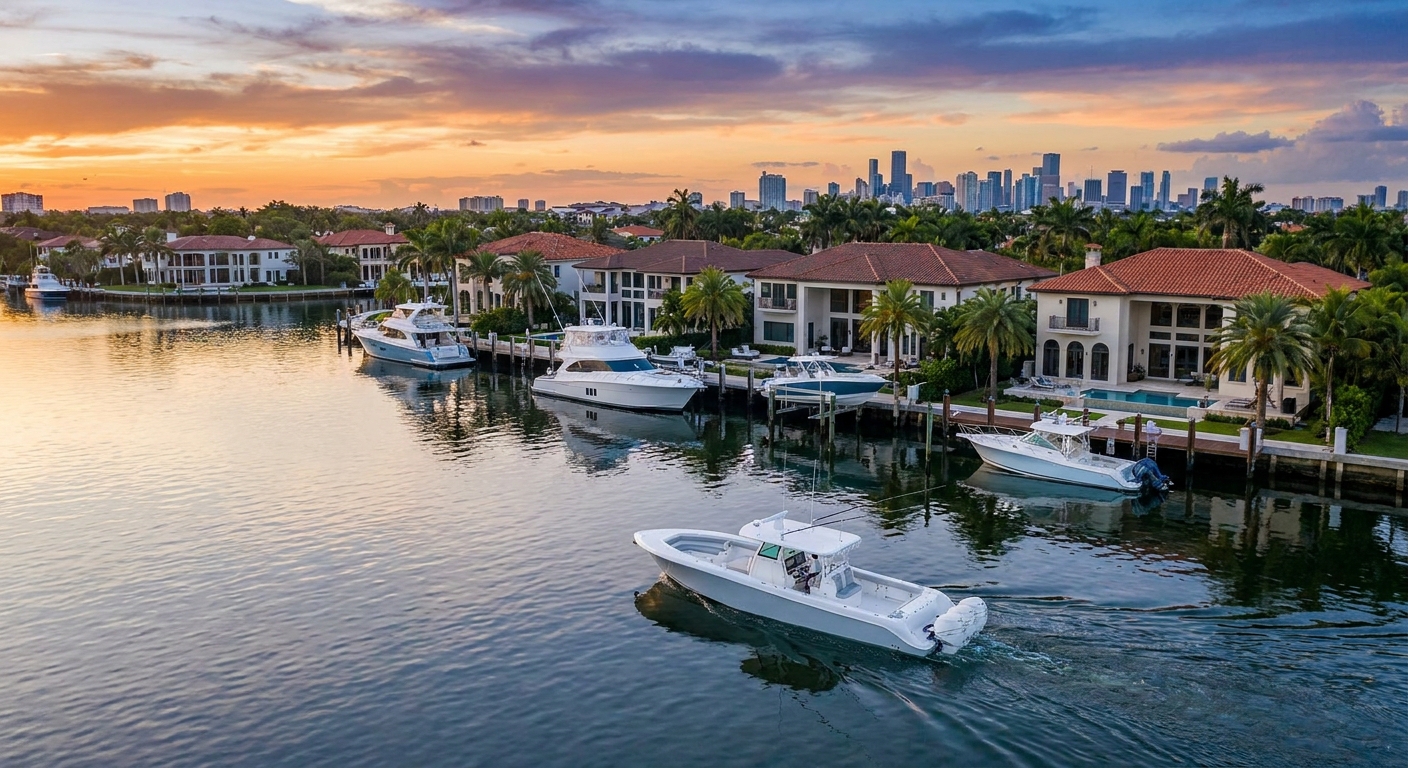
Best Waterfront Neighborhoods in Miami for Boaters 2026
Seven Miami waterfront neighborhoods actually deliver true no-fixed-bridge ocean access for serious boaters in 2026 — the rest just have a dock and a marketing photo.
- Coral Gables' Old Cutler Bay corridor wins the best waterfront neighborhoods Miami boaters search for deep-water yacht access — Buy.
- Key Biscayne offers no-fixed-bridge ocean access in under 15 minutes from most private docks — Buy.
- Star Island and Sunset Islands carry trophy pricing but often need dredging permits before a serious yacht fits — Hold.
- Aventura's Intracoastal docks are convenient but bridge-restricted, capping vessel size for many owners — Consider.
- North Bay Road remains the quiet dock-row pick for owners who want privacy over marina-style social scenes — Buy.
Why this matters
A waterfront address in Miami doesn't automatically mean you can get a boat out of it. Fixed bridges, seasonal manatee zones, and dredging permits decide whether a dock is decorative or functional — and in 2026, with dock permitting backlogs still running months in South Florida counties, buying the wrong waterway costs real time and real money.
The difference between a home on a canal with a 10-foot fixed bridge and a home on open Biscayne Bay is the difference between owning a 24-foot center console and owning nothing that floats worth having. This guide ranks the neighborhoods where dockage actually functions, not just where the listing photos look good.
How this list was ranked
Ranking criteria for best waterfront neighborhoods Miami boaters actually search for come down to four factors: bridge clearance (fixed vs. no-fixed-bridge), minutes to open ocean or Biscayne Bay, typical dock/seawall condition, and permitting friction for dredging or lift installation. Neighborhoods with a mix of canal frontage and open-bay frontage get flagged, since the difference inside a single zip code can be enormous — Coral Gables is the clearest example of this split.
Pricing context and permit status shift constantly, so treat every figure here as directional for 2026 and confirm current dock specs before writing an offer.
1. Coral Gables (Old Cutler Bay / Tahiti Beach) — the deep-water pick
Homes along the Old Cutler Bay waterway and Tahiti Beach peninsula sit on open water with no fixed bridges between the dock and Biscayne Bay, and many parcels support 60-plus-foot vessels with private lifts. Ocean access typically runs 20 to 30 minutes depending on tide and vessel draft. This is the neighborhood where a serious sportfisher or express cruiser actually gets used weekly instead of sitting tied up.
For a deeper look at inventory and pricing patterns, the Coral Gables luxury homes market breaks down which streets carry true deep-water frontage versus canal-only lots. Verdict: Buy for owners running anything over 40 feet.
2. Key Biscayne — the island escape
Key Biscayne sits between Biscayne Bay and the Atlantic, and most private docks here clear straight to open ocean without a single fixed bridge to navigate. The trade-off is limited inventory — this is a small island with a fixed number of waterfront parcels, so turnover is slow and competition is sharp.
Investors using a 1031 exchange to move into Key Biscayne waterfront often cite the island's scarcity as the long-term value driver; the 1031 exchange properties in Key Biscayne page covers how that structure applies to island dock lots. Verdict: Buy, with the caveat that patience is part of the strategy here.
3. Coconut Grove — the sailor's harbor
Coconut Grove has functioned as Miami's sailing hub since before most of the city's skyline existed, and it still hosts two working marinas plus private dockage along Bayshore Drive. Depth varies block by block — some canal-adjacent lots need dredging permits before a keelboat fits, so this neighborhood rewards buyers who check charts before checking comps.
Verdict: Buy for sailboats and shallow-draft cruisers; Hold if you're set on a deep-draft motor yacht until you've confirmed dock depth in writing.
4. Sunset Islands, Miami Beach — private island prestige
The four Sunset Islands off the MacArthur Causeway offer private, gated dockage with direct Biscayne Bay access and no fixed bridges between the dock and open water. Lot sizes run large enough for substantial private lifts, and the islands carry some of the tightest security and privacy standards in Miami-Dade.
Pricing sits at the top of the market, and inventory turns over rarely — when it does, it moves fast. Verdict: Buy for buyers prioritizing privacy and open-bay access over proximity to South Beach nightlife.
5. Star Island — the trophy address
Star Island carries some of the highest per-lot pricing in Miami-Dade and direct Biscayne Bay frontage, but several parcels need permitted dredging before a large-draft yacht can dock comfortably. Buyers chasing the address alone sometimes skip verifying actual water depth at the seawall, which is the single most expensive mistake on this list.
Verdict: Hold until dock depth and any pending dredging permits are confirmed in writing — the name is worth a premium, the water underneath it isn't guaranteed to match.
6. Aventura / Williams Island — Intracoastal convenience
Aventura and Williams Island sit directly on the Intracoastal Waterway with strong dock infrastructure and easy access to Haulover Inlet, but several bridges along common Intracoastal routes carry fixed clearances that cap vessel height for larger flybridge boats. This is a strong pick for center consoles and mid-size cruisers, less ideal for anything with tall superstructure.
Verdict: Consider if your vessel clears local bridge heights; confirm clearance before assuming your current boat fits.
7. North Bay Road — the quiet dock-row pick
North Bay Road runs along Biscayne Bay just west of Miami Beach's main strip, and it's built for owners who want dock access without the island-hopping social scene of Star or Sunset Islands. Bay frontage here typically means no fixed bridges to open water and long-standing private seawalls, many already permitted for lifts.
Verdict: Buy for buyers who want function over flash — this is the neighborhood locals recommend before the trophy islands.
Comparison at a glance
| Neighborhood | Bridge Access | Ocean/Bay Access Time | Verdict |
|---|---|---|---|
| Coral Gables (Old Cutler Bay) | No fixed bridges | 20-30 min | Buy |
| Key Biscayne | No fixed bridges | Under 15 min | Buy |
| Coconut Grove | Varies by block | 15-25 min | Buy/Hold |
| Sunset Islands | No fixed bridges | 10-20 min | Buy |
| Star Island | Depth-dependent | 10-15 min | Hold |
| Aventura/Williams Island | Fixed bridges present | 15-25 min | Consider |
| North Bay Road | No fixed bridges | 15-20 min | Buy |
Talk through Miami dockage options
Get a curated shortlist of true no-fixed-bridge waterfront listings for 2026.
Where to buy — and how to verify dockage before you offer
- Pull the seawall and dock permit history from Miami-Dade before writing an offer — a listing photo of a yacht does not confirm legal dock depth or lift capacity.
- Check bridge clearance charts, not just the listing description, for any route between the dock and open water. "Intracoastal access" can still mean three fixed bridges between you and the ocean.
- Work with an advisor who checks nautical charts alongside comps. Waterfront value in Miami swings block by block based on depth and bridge access, and a generalist agent won't flag it.
Buyers weighing waterfront against condo living should also compare against the broader waterfront homes for sale in Miami buyer's guide, which breaks down financing and inspection specifics for dockable single-family lots versus marina-slip condos.
What to avoid
- Canal lots marketed as "waterfront" with a fixed bridge under 15 feet clearance — fine for a kayak, useless for a real vessel.
- Listings that show dock photos without stated depth or permit status — assume nothing until it's verified.
- Neighborhoods chasing prestige over function, where the address costs a premium but the water underneath needs six-figure dredging before a yacht fits.
Foreign buyers and investors evaluating these same neighborhoods for portfolio purposes should review the investment properties for foreign buyers in Miami breakdown before comparing dockage against rental yield.
“If the listing photo shows a yacht but not a stated dock depth, assume the depth doesn't support one.”
FAQ
What are the best waterfront neighborhoods in Miami for boaters in 2026?
Coral Gables' Old Cutler Bay corridor, Key Biscayne, and the Sunset Islands lead the list for true no-fixed-bridge ocean access in 2026. Coconut Grove and North Bay Road follow closely for owners prioritizing function over prestige pricing.
Is Key Biscayne better than Star Island for a large yacht?
Key Biscayne generally wins for large yachts because most private docks there clear straight to open ocean without fixed bridges. Star Island carries a higher address premium but several parcels need permitted dredging to reach comparable depth.
How much does waterfront dock access add to a Miami home's value?
Verified no-fixed-bridge dockage with confirmed depth commands a significant premium over canal lots with bridge restrictions, though the exact figure varies by neighborhood and lot size. The depth and permit status matter more to value than the dock's length alone.
Do all Coconut Grove waterfront homes have deep-water access?
No — Coconut Grove access varies block by block, and some canal-adjacent lots need dredging permits before a deep-draft vessel fits. Confirm dock depth in writing before assuming Coconut Grove works for a large motor yacht.
What should I check before buying a waterfront home for boating in Miami?
Pull the seawall and dock permit history, check bridge clearance on the actual route to open water, and confirm stated dock depth rather than trusting listing photos. These three checks catch most of the expensive surprises in Miami waterfront deals.
Are Intracoastal homes in Aventura good for boaters?
Aventura and Williams Island offer strong dock infrastructure and easy access to Haulover Inlet, but several bridges on common Intracoastal routes carry fixed clearances. They work well for center consoles and mid-size cruisers, less well for tall flybridge yachts.
Why do some Miami waterfront homes need dredging permits?
Silt buildup and shallow original construction mean some canal and even bay-adjacent lots don't have enough depth for larger vessels without dredging. Permits for dredging in Miami-Dade can take months, so confirm status before closing.
One last thing
The biggest surprise buyers run into isn't price — it's finding out after closing that the dock they bought needs a permitted dredge before their boat fits, a process that can take months to clear in Miami-Dade in 2026. Confirm depth and permit status before the inspection period ends, not after.


