Homes for Sale in Miami 2026: Best Segments, Ranked
Miami's luxury inventory spans guard-gated islands, preconstruction towers, and Mediterranean estates that never touch the open MLS — and the right pick depends entirely on what kind of buyer you are. This guide ranks the segments of homes for sale in Miami that matter most in 2026, with a clear verdict on each.
- Star Island and Indian Creek lead homes for sale in Miami for privacy-first buyers at $25M-$60M — Buy if guard-gated exclusivity is non-negotiable.
- Brickell preconstruction towers deliver through 2026-2027 at $900-$1,600 per square foot — Consider for capital appreciation.
- Coconut Grove waterfront estates ($3M-$15M) are the safe pick for buyers who want canopy streets over concrete.
- Edgewater new-builds at $600-$900 per square foot are the wildcard — Wait unless you can hold five-plus years.
- Pinecrest acre-lot compounds remain the Skip-the-noise option for families who want land, not lobby amenities.
Why this matters
Miami's luxury segments do not move together. Brickell condo pricing can soften while Star Island holds firm, because the buyers competing for each are different people with different urgency. Treat "Miami real estate" as one market and you'll overpay for the wrong asset or underbid on the right one. Kelby Contreras works these segments daily across Miami, Fort Lauderdale, and Palm Beach, and the ranking below reflects how discerning buyers actually deploy capital in 2026 — not generic listing chatter.
How this list was ranked
Each segment is scored on three things a serious buyer actually cares about: entry price discipline, resale liquidity, and how much of the inventory trades off-market versus on the public listing feed. Segments where preconstruction supply is diluting resale value get flagged. Segments where guard-gated scarcity protects pricing get the strongest verdicts. This is not a popularity list — it's a capital-discipline list for 2026.
The ranked list: Miami's top segments for discerning buyers
1. Star Island & Indian Creek — the ultra-prime pick
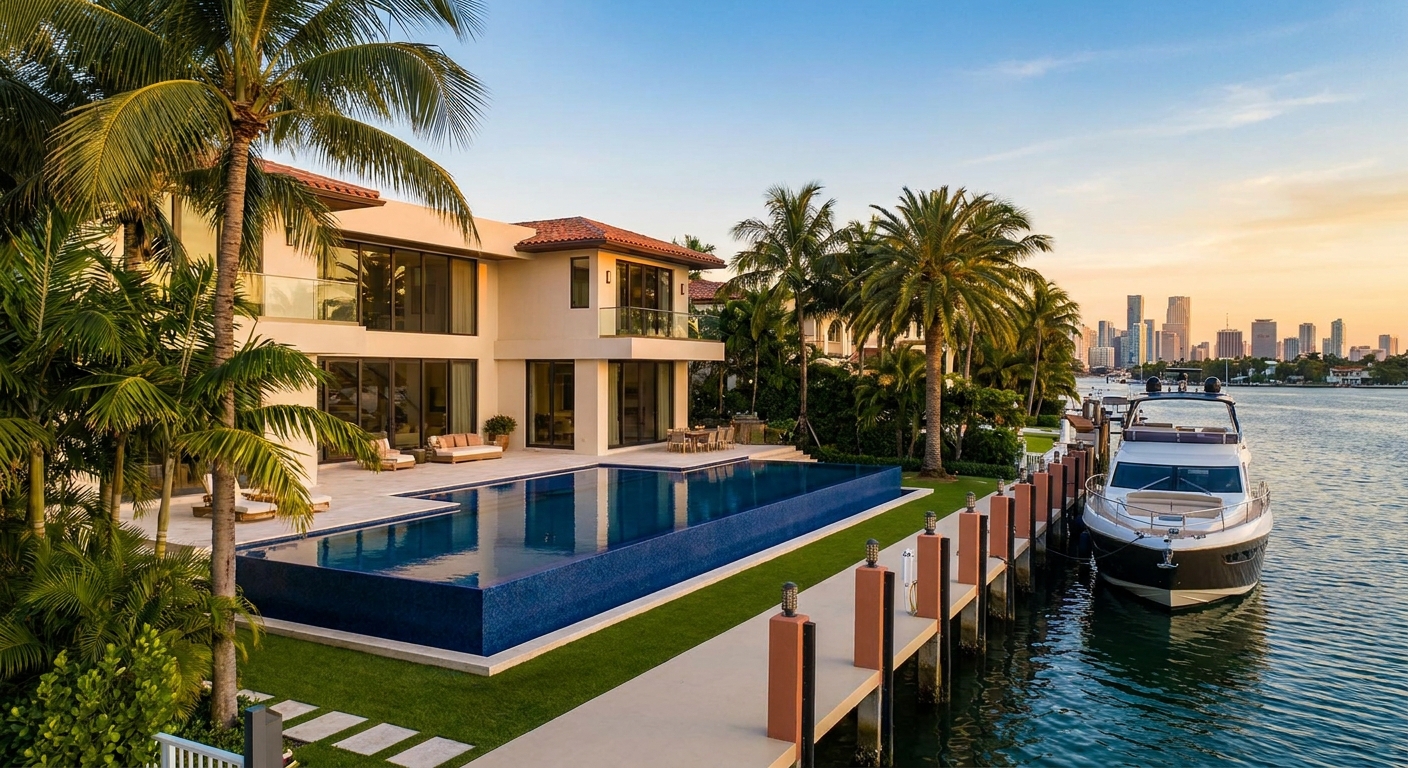
Guard-gated, boat-accessible, and largely traded through relationships rather than public listings. Entry pricing on remaining waterfront lots runs $25M to $60M in 2026, with several trophy estates never reaching the open market at all. Buyers here are paying for scarcity — there are fewer than three dozen combined lots across both islands, and turnover is rare. This is the segment for a buyer who wants privacy above amenities and can move on off-market intelligence. Buy if guard-gated exclusivity and long-term capital preservation matter more than square footage per dollar.
2. Coconut Grove waterfront — the safe pick
Canopy streets, Biscayne Bay frontage, and a zoning code that has kept density lower than Brickell or Edgewater. Waterfront estates here trade between $3M and $15M, with inventory that turns over steadily rather than in speculative waves. Coconut Grove buyers skew toward families who want yard space and boat access without the tower-living tradeoff. It's the segment least likely to surprise you five years out. Buy for buyers prioritizing lifestyle stability over short-term appreciation.
3. Coral Gables estates — the architecture play
Mediterranean Revival covenants protect the aesthetic here in a way no other Miami neighborhood matches, and lot minimums (often 10,000 square feet or more) keep density in check. Estate pricing runs $2M to $10M depending on canal access and historic designation. Buyers choosing Coral Gables are typically trading some proximity to the water for architectural permanence and school-district stability. Consider if long-term resale value tied to zoning discipline outweighs immediate waterfront access.
4. Brickell preconstruction towers — the capital-growth wildcard
Brickell remains the densest concentration of new luxury condo supply in South Florida, with towers delivering through 2026 and into 2027 at $900 to $1,600 per square foot. The upside is real — early buyers in prior Brickell cycles captured meaningful appreciation before completion. The risk is equally real: several towers are competing for the same buyer pool, which can soften resale pricing on units that lack a water view or a signature amenity package. Consider for buyers comfortable holding through a 2026-2027 delivery window, not for anyone needing liquidity inside 18 months.
5. Miami Beach island enclaves — the turnkey luxury pick
Sunset Islands and La Gorce trade in the $8M to $30M range for renovated or newly built waterfront homes, with dock access and Art Deco-adjacent zoning that limits teardown density. This segment suits buyers who want move-in-ready luxury without the entitlement risk of ground-up construction. Inventory is thinner than Brickell but deeper than Star Island, giving buyers more negotiating room than the ultra-prime islands. Buy if turnkey condition and immediate occupancy outweigh the discount available on a fixer estate.
6. Edgewater new-builds — the patient wildcard
Edgewater's Biscayne Bay-adjacent towers price at $600 to $900 per square foot, meaningfully below Brickell for comparable water views. The tradeoff is a still-maturing retail and dining corridor and a heavier concentration of investor-owned units, which can dilute the buyer pool at resale. This segment rewards patience — buyers who can hold five years or more typically see the neighborhood catch up to Brickell pricing. Wait unless you're buying purely for a long hold and don't need short-term liquidity.
7. Pinecrest & Palmetto Bay estates — the land-first pick
Acre-plus lots, mature tree canopy, and a buyer pool almost entirely made up of families rather than investors. Pricing runs $2M to $6M for estates with real land, not shared amenities. This segment sits outside the condo-tower noise entirely and trades on school zones and lot size rather than skyline views. Buy for buyers who want a compound, not a building.
Comparison table
| Segment | Price range (2026) | Buyer profile | Verdict |
|---|---|---|---|
| Star Island & Indian Creek | $25M-$60M | Privacy-first, capital preservation | Buy |
| Coconut Grove waterfront | $3M-$15M | Families, lifestyle stability | Buy |
| Coral Gables estates | $2M-$10M | Architecture, school-zone buyers | Consider |
| Brickell preconstruction | $900-$1,600/sq ft | Capital-growth investors | Consider |
| Miami Beach island enclaves | $8M-$30M | Turnkey luxury, immediate occupancy | Buy |
| Edgewater new-builds | $600-$900/sq ft | Patient, long-hold investors | Wait |
| Pinecrest & Palmetto Bay | $2M-$6M | Land-first families | Buy |
Where to buy
- Work through a licensed buyer's agent with off-market access — a meaningful share of Star Island and Coconut Grove inventory never reaches the public listing feed.
- Verify condo association reserve funding and post-reform inspection status before any Brickell or Edgewater preconstruction contract in 2026; Florida's condo reforms have changed what buyers should demand in disclosure.
- Get pre-approval and proof-of-funds documentation ready before touring guard-gated islands — access is often conditioned on it, and it shortens negotiation timelines.
“Treat Miami as one market and you'll overpay for the wrong segment or underbid on the right one.”
FAQ
What is the best area for homes for sale in Miami in 2026?
Coconut Grove and the Miami Beach island enclaves offer the strongest balance of turnkey quality and resale stability in 2026. Star Island and Indian Creek rank higher on exclusivity but trade far less frequently.
Are Brickell condos a good investment in 2026?
Brickell preconstruction pricing runs $900 to $1,600 per square foot in 2026, with real upside for buyers who can hold through a 2026-2027 delivery window. Units without a water view face more resale competition from the same delivery cycle.
How much does a waterfront home cost in Miami?
Coconut Grove waterfront estates run $3M to $15M in 2026, while ultra-prime Star Island and Indian Creek lots start near $25M. Miami Beach island enclaves sit in between at $8M to $30M for renovated or new construction.
Is Coral Gables better than Coconut Grove for luxury buyers?
Coral Gables suits buyers prioritizing architectural covenants and lot-size protection, while Coconut Grove suits buyers who want direct waterfront and boat access. Both trade in overlapping price bands, so the decision comes down to water access versus zoning permanence.
Do most luxury Miami homes sell off-market?
A meaningful share of Star Island, Indian Creek, and upper Coconut Grove inventory trades through private relationships rather than the public MLS. Buyers without an agent holding off-market relationships typically see a narrower slice of true inventory.
What should I avoid when buying preconstruction in Miami?
Avoid signing without verifying the condo association's reserve funding and inspection compliance under Florida's post-reform condo requirements. Skipping this step in 2026 has caused delayed closings and unexpected assessments in several Brickell and Edgewater towers.
Is Edgewater a good long-term investment?
Edgewater prices $600 to $900 per square foot in 2026, meaningfully below Brickell for comparable bay views, but the buyer pool skews investor-heavy. It rewards a five-year-plus hold rather than a quick flip.
How do I find off-market homes for sale in Miami?
Off-market access in Miami typically comes through an agent with standing relationships on guard-gated islands and in low-turnover neighborhoods like Coconut Grove. Public listing portals capture only a portion of true luxury inventory in 2026.
One last thing
The biggest mistake discerning buyers make in 2026 isn't overpaying for Star Island — it's assuming Brickell preconstruction and Edgewater new-builds behave the same way. They don't: Brickell's water-view units are holding value against the same delivery glut that's softening Edgewater's non-view units. Know which building tier you're actually buying before you sign, not after.


