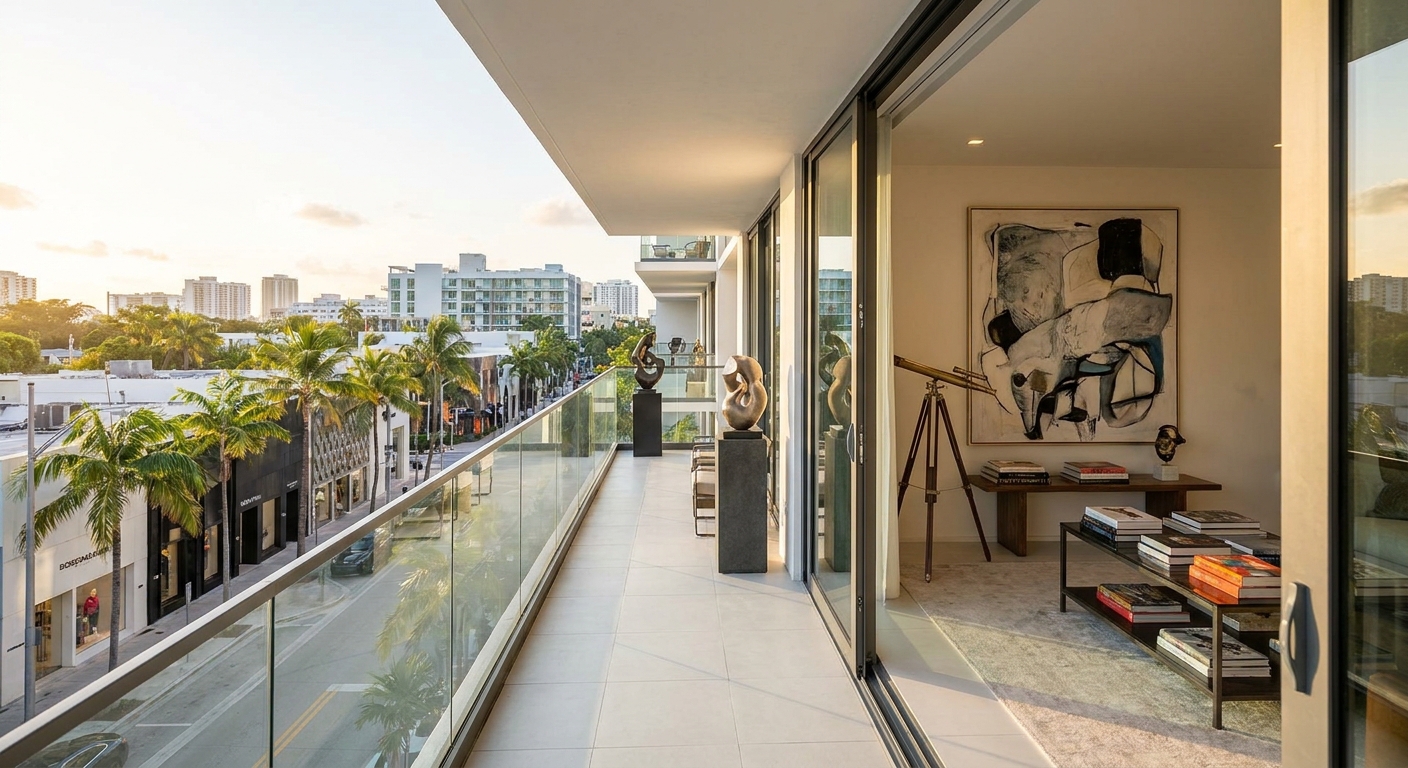
Luxury Condos Miami Design District: 2026 Buyer Verdict
Miami's Design District is a gallery-and-boutique corridor first, a residential zip code second — which means the condo towers that actually work for art collectors sit just outside its borders, in Edgewater, the Upper Buford Corridor, and Brickell. This guide breaks down what those buildings need to have before a collector's Basquiat, Kusama, or emerging-artist canvas ever touches the wall.
- Luxury condos near Miami Design District need 10+ foot ceilings and private elevators — branded residences win this category. Buy.
- Skip units under 9-foot ceilings; most large-format canvases need vertical clearance older 2010s towers don't offer.
- Brickell's new construction cluster is the practical overflow market when Design District-adjacent inventory runs thin. Consider.
- Freight elevator access and climate stability matter more than square footage for a collector's residence in 2026.
Why this matters
Design District itself has almost no condo towers — it's zoned for galleries, flagship retail, and restaurants, not residential density. Collectors who want to walk to Locust Projects, the ICA Miami, or their gallerist's opening actually buy in the buildings that ring the district, and the ones that work are the ones engineered for art, not just for skyline photos. Ceiling height, freight access, and climate stability separate a genuine collector's unit from a listing that photographs well and fails on move-in day.
Who this is for
This guide is built for collectors carrying six-figure to seven-figure pieces who need wall clearance, discreet loading, and humidity control as non-negotiables — not amenities checklist items. If your collection includes anything over 60 inches on a side, or work on paper that needs climate stability, the criteria below determine whether a building actually functions or just looks the part in a listing photo. Kelby Contreras works this exact buyer profile across luxury condo neighborhoods in Miami, matching collection size and logistics needs to specific towers before a showing ever happens.
What to look for in luxury condos near Miami Design District
Ceiling height and usable wall run
Most pre-2015 Miami towers built to 8-foot-6 or 9-foot ceilings, which kills anything over 72 inches vertically once you account for baseboards and crown detail. Towers delivered since 2020 by Related Group and Terra routinely run 10 to 12 feet in the primary living spaces, and that extra clearance is the single biggest factor in whether a collection actually fits. Measure wall runs, not just square footage — a 2,400 square foot unit with chopped-up walls can hold less art than a 1,800 square foot open-plan layout.
Private or direct-to-unit elevator access
A collector moving a crated piece worth six figures does not want it riding a shared elevator car with strangers and grocery carts. Private elevator access, or at minimum a keyed elevator bank, controls who handles proximity to the work during move-in and during any future rehang. This matters as much for insurance underwriting as it does for privacy — carriers ask about building access controls when pricing a fine-art policy.
Climate and humidity stability
South Florida humidity swings hard between wet season and dry season, and older HVAC systems in pre-2010 buildings cycle inconsistently enough to stress canvas and works on paper over a few years. Newer mechanical systems hold tighter humidity bands, and some buildings offer supplemental dehumidification zones on request. Ask for the building's mechanical spec sheet before assuming any tower handles this correctly.
Freight elevator and loading dock access
Moving a crated sculpture or a large canvas through a residential lobby is a logistics problem, not a cosmetic one. Buildings with a dedicated freight elevator and loading dock let movers bypass the main lobby entirely, which protects both the piece and the other residents' patience. This single feature eliminates more buildings from a collector's shortlist than any amenity list ever will.
Proximity to Design District and Basel-season logistics
Distance to Design District matters most during Art Basel Miami week each December, when gallery openings, private previews, and collector dinners stack up nightly. A five-minute drive versus a twenty-minute drive across causeway traffic during that week is the difference between attending four events or one. Edgewater and the Upper Buford Corridor solve this; South Beach and most of Brickell do not.
Building discretion and staff turnover
Doorstaff who know a resident's routine and don't gossip about who's coming and going matter more to collectors than to almost any other buyer segment. Lower staff turnover correlates with tighter discretion, and buildings with concierge-level service tend to hold that consistency better than self-managed smaller buildings.
Top picks for art collectors near Miami Design District
Branded residences — the pedigree play. Branded towers built after 2019 standardize 10-to-12-foot ceilings and freight elevator access as part of their design brief, because the operator brands themselves demand it for their own marketing. The tradeoff is HOA dues that run meaningfully higher than a non-branded comparable. Buy if collection size and insurance requirements justify the premium — buying a branded residence in Miami walks through the underwriting differences before you tour.
Private-elevator residences — the discreet arrival. Buildings offering direct-to-unit elevator access solve the handling-and-privacy problem in one move, and they're increasingly common in towers delivered since 2021. The catch is unit count per elevator bank — some buildings cap it at four units, others stretch to twelve, which changes wait times and shared-access risk. Buy for collectors prioritizing discretion over price; review condos with private elevators in Miami for the layout differences that matter for crated moves.
Brickell new construction — the overflow market. When Design District-adjacent inventory is thin, Brickell's 2023-and-newer towers offer comparable ceiling heights and freight access at a lower price basis, trading proximity for value. The commute to Design District runs 15 to 20 minutes without traffic, which is workable outside Basel week. Consider this cluster as the pragmatic second choice — new construction condos in Brickell covers which towers actually deliver the ceiling heights collectors need.
Boutique low-rise buildings — the wildcard. A handful of smaller buildings directly bordering Design District offer loft-style ceilings and low unit counts, which reads as intimate and collector-friendly on paper. Many of these predate 2010 and lack freight elevators, so verify loading logistics before assuming charm translates to function. Consider, but only after confirming freight access in writing.
Wellness-focused towers — the amenity trap. Buildings marketing spa floors and cold-plunge circuits often sacrifice ceiling height and wall run to fit more amenity square footage into the base of the tower. The units above tend to be fine, but ground-floor and lower-floor units in these buildings frequently fall short on clearance. Skip unless the specific unit has been measured against your largest piece.
Talk Through Your Collection's Logistics
Kelby Contreras maps ceiling heights, freight access, and climate specs against your collection before any showing.
What to avoid
- Short-term rental buildings. High turnover and constant unit access by cleaning crews and renters increase handling risk and complicate insurance underwriting for on-site collections.
- Buildings without a freight elevator. No amount of ceiling height fixes the problem of moving a crated piece through a lobby full of residents and a single passenger elevator.
- Pre-2010 conversions marketed as "artist lofts." The name sells the fantasy; the mechanical systems and humidity control usually don't match a real collection's needs.
A rule worth repeating: measure the wall run before you fall in love with the view.
Verdict comparison
| Type | Typical Ceiling Height | Private Elevator | Freight Access | Best For | Verdict |
|---|---|---|---|---|---|
| Branded residences | 10-12 ft | Often | Standard | Large collections, insurance-sensitive buyers | Buy |
| Private-elevator towers | 9-11 ft | Yes | Varies | Discretion-first buyers | Buy |
| Brickell new construction | 10-11 ft | Sometimes | Standard | Value-conscious collectors | Consider |
| Boutique low-rise | 10-14 ft | Rare | Rare | Intimate collections, verified logistics | Consider |
| Wellness-focused towers | 8.5-10 ft | Sometimes | Standard | Non-art-first buyers | Skip |
FAQ
What's the best neighborhood for luxury condos near Miami Design District?
Edgewater and the Upper Buford Corridor sit closest to Design District's galleries and offer the newest towers with collector-friendly ceiling heights. Brickell is the practical fallback when inventory in those two areas is thin.
Is Brickell a good alternative to Design District for art collectors?
Yes, for collectors willing to trade a 15-to-20-minute drive for better pricing and comparable ceiling heights and freight access. It's a weaker fit only during Art Basel week, when proximity to Design District events matters most.
How much wall clearance does a condo need for large-format art?
Anything over 60 inches on a side needs at least 9-foot ceilings and an unbroken wall run without crown molding interruptions. Buildings from 2020 onward typically deliver 10 to 12 feet, which handles most collections comfortably.
Do Miami Design District condos have private elevators?
Design District itself has almost no residential towers, but bordering buildings in Edgewater and the Upper Buford Corridor increasingly offer private or keyed elevator access. Confirm unit count per elevator bank before assuming full privacy.
Are branded residences worth it for art collectors?
Branded residences standardize the ceiling heights, freight access, and climate control collectors need, but carry higher HOA dues than comparable non-branded towers. They're worth it when collection value and insurance requirements justify the premium.
How much do luxury condos near Miami Design District cost in 2026?
Pricing varies widely by building age, branding, and proximity, and current figures should be confirmed against active listings rather than dated averages. Branded and private-elevator towers command a premium over standard new construction in the same corridor.
Can I retrofit climate control for art storage in a Miami condo?
Supplemental dehumidification and zoned HVAC can be added in most units, but retrofitting is easier in towers with modern mechanical risers than in pre-2010 buildings. Check the building's mechanical specs before assuming a retrofit is straightforward.
What's the difference between a private elevator and a keyed elevator?
A private elevator opens directly into the unit with no shared landing, while a keyed elevator restricts a shared elevator bank to a limited number of units using a key fob. Both reduce handling risk during art moves, but a private elevator offers more control over access.
One last thing
Design District's own zoning is the detail most buyers miss: the neighborhood is built for galleries and flagship retail, not condo towers, so "living in Design District" almost always means living a short drive away in Edgewater or Brickell and walking in for openings. Collectors who understand this upfront shop the right buildings from the start instead of chasing listings inside a district that was never built to hold them.


