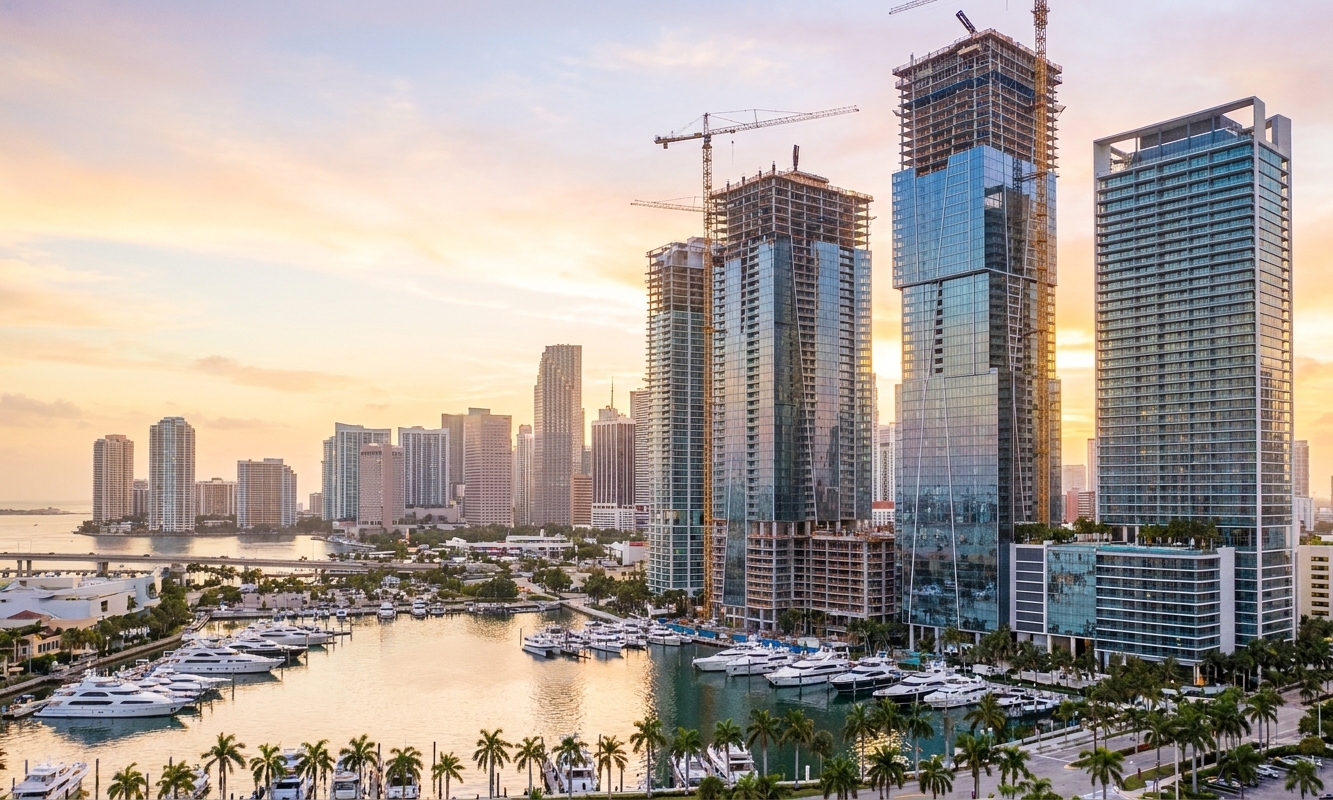
Miami Preconstruction Condos for Investors: 2026 Verdict
Miami's preconstruction market moves in cycles that reward investors who understand deposit schedules, delivery risk, and rental ordinances better than they understand square footage. This guide breaks down what separates a defensible preconstruction buy from a speculative one in 2026.
TL;DR
Miami preconstruction condos for investors work best when the buyer treats the deposit schedule and developer track record as the real underwriting, not the renderings. In 2026, submarkets like Brickell and Edgewater still deliver strong absorption for cash-flow-focused buyers, while heavily amenitized towers with untested rental restrictions are a Skip for anyone chasing short-term yield. Kelby Contreras recommends verifying flood zone status, HOA fee trajectory, and assignment clauses before any deposit leaves escrow — the contract, not the marketing deck, is the product.
Why This Matters
Preconstruction pricing in Miami looks attractive on paper because you're buying at today's basis for a unit that delivers in 2028 or 2029. That gap is exactly where risk hides: construction delays, insurance premium spikes, and rental ordinance changes can erode returns that looked solid at contract signing.
Investors who treat preconstruction as a passive allocation get burned. Investors who treat it as a structured, staged commitment — with exit optionality built in from day one — tend to outperform. Kelby Contreras works this exact niche across Miami, Fort Lauderdale, and Palm Beach, and the criteria below reflect what actually separates a strong preconstruction position from a paper loss.
Who This Is For
This guide is built for the investor allocating capital into Miami preconstruction condos for investors — not the owner-occupant hunting for a primary residence. That means global investors parking capital in a stable USD asset, domestic buyers building a rental portfolio, and 1031-exchange participants who need a defined delivery timeline. If you're not comfortable with a multi-year deposit schedule and zero income until closing, preconstruction isn't your lane — look at resale inventory instead.
What to Look for in Miami Preconstruction Condos for Investors
Developer Track Record and Delivery History
A developer's last three completed projects tell you more than any brochure. Ask specifically how many months late the most recent tower delivered and whether unit finishes matched the sample model — vague answers here are a red flag, not a formality.
Deposit Structure and Carry Costs
Most Miami preconstruction contracts in 2026 still follow staged deposits, often landing in the 20-50% range paid in installments before closing, with the balance due at delivery via cash or financing. Model your carry cost on the full deposit sitting in escrow earning nothing for two to three years, not just the headline purchase price.
Rental Restrictions and Short-Term Rental Rules
Miami-Dade and Broward municipalities have tightened short-term rental ordinances building by building, not city-wide. Confirm the specific condo association's rental minimum — 30 days, 90 days, or no restriction — in writing before you underwrite a short-term rental yield, because marketing materials routinely overstate flexibility.
Flood Zone Status and Insurance Exposure
Insurance premiums on new coastal construction in South Florida have climbed sharply since 2023, and that trend hasn't reversed in 2026. A unit two blocks inland can carry a materially lower premium than a waterfront tower in the same submarket — get a firm insurance quote before you sign, not after.
Resale Liquidity and Absorption Rate
A building that's 85% sold out within 18 months of launch signals real demand; a tower still marketing units three years after groundbreaking signals oversupply. Absorption rate matters more to your exit than almost any amenity list.
HOA and Condo Fee Trajectory
Post-Surfside structural reserve requirements have pushed HOA fees higher across new and existing Florida condos alike. A tower with elaborate amenities — spa floors, marina access, multiple pools — carries a fee structure that compounds against your net yield every single year you hold it.
Top Picks by Submarket
Brickell — the safe pick. Miami's financial district keeps drawing corporate relocations and institutional tenants, which supports both rental demand and resale liquidity. Deposit structures here tend to run standard 20-50% staged schedules, and absorption on recent towers has stayed strong through 2026. Buy for investors prioritizing tenant demand and exit liquidity over yield maximization.
Edgewater — the value play. Positioned between Downtown and Miami's Design District, Edgewater has seen a wave of preconstruction towers priced below Brickell and Sunny Isles comparables, with several projects targeting 2027-2028 delivery. The tradeoff is a still-developing retail base at street level. Consider if you're comfortable holding through a neighborhood's maturation curve.
Sunny Isles Beach — the wildcard. Direct oceanfront positioning draws international buyers and supports premium resale pricing, but flood zone insurance costs run meaningfully higher than inland submarkets. Consider only if your model already accounts for elevated insurance carry.
Downtown Miami — the density bet. Transit access via Brightline and the Metromover keeps this submarket attractive to renters without cars, and rental restriction rules tend to be more investor-friendly than beachfront associations. Buy for cash-flow-focused portfolios.
Coconut Grove — the patient capital pick. Lower-density zoning limits new preconstruction supply, which protects long-term appreciation, but that same scarcity means fewer units and higher entry pricing per project. Consider for investors with a 7-10 year horizon rather than a quick flip.
What to Avoid
- Assignment contracts without explicit developer consent language. If the contract doesn't clearly permit resale assignment before closing, your exit flexibility disappears the moment you sign.
- Towers marketed on short-term rental yield without a confirmed association rule in writing. Sales teams routinely imply Airbnb-style flexibility that the actual condo documents don't support.
- Heavily amenitized buildings with reserve funding still "to be determined." Undefined reserve schedules almost always mean higher special assessments after delivery, not lower ones.
Verdict Comparison
| Submarket | Deposit Risk | Rental Flexibility | Insurance Exposure | Verdict |
|---|---|---|---|---|
| Brickell | Standard | Moderate | Moderate | Buy |
| Edgewater | Standard | Moderate | Low-Moderate | Consider |
| Sunny Isles Beach | Standard | Moderate-Low | High | Consider |
| Downtown Miami | Standard | High | Moderate | Buy |
| Coconut Grove | Higher entry cost | Low | Low-Moderate | Consider |
FAQ
What's the best area for Miami preconstruction condos for investors in 2026? Brickell and Downtown Miami currently offer the strongest combination of rental demand and resale liquidity for investor-focused buyers, based on absorption trends through 2026. Waterfront submarkets like Sunny Isles Beach carry stronger appreciation potential but higher insurance carry costs.
Is preconstruction better than resale for investors right now? Preconstruction offers today's basis for a 2028-2029 delivery, which can outperform resale if construction stays on schedule. Resale gives immediate rental income and known HOA history, which preconstruction cannot offer until closing.
How much deposit do Miami preconstruction condos require? Most 2026 contracts follow a staged 20-50% deposit schedule paid in installments before closing, with the balance due at delivery. Exact terms vary by developer and should be confirmed in the purchase contract, not the sales brochure.
Can investors rent out preconstruction condos short-term in Miami? It depends entirely on the specific condo association's rules, not the city as a whole. Some Miami-Dade buildings permit rentals under 30 days; others require 90-day minimums or prohibit short-term rentals outright.
How risky is buying preconstruction condos as a foreign investor? Foreign investors face the same deposit and delivery risks as domestic buyers, plus currency exposure over the multi-year construction period. Working with an advisor who structures the deposit schedule and financing timeline around that exposure reduces the risk meaningfully.
What happens if a Miami preconstruction project gets delayed? Most contracts include an outside completion date after which buyers can request a deposit refund, but enforcing that clause requires reading the contract closely before signing. Delays are common enough in 2026 that this clause deserves as much attention as the price.
Do HOA fees go up after a preconstruction condo delivers? Yes, almost always — post-Surfside reserve funding requirements have pushed fees higher across new Florida condo deliveries. Model your net yield using a fee 10-20% above the developer's initial estimate.
Should I buy preconstruction condos in Miami for appreciation or cash flow? Submarkets like Coconut Grove favor appreciation-focused holds due to constrained supply, while Downtown Miami and Brickell better support cash-flow underwriting due to steady rental demand. Decide which goal drives the purchase before you pick the submarket.
One Last Thing
The single most overlooked line item in Miami preconstruction underwriting isn't the purchase price — it's the insurance quote you don't get until after you've already signed. Investors who lock in a firm insurance estimate before depositing funds consistently avoid the yield surprises that hit everyone else at closing in 2026 and beyond.


